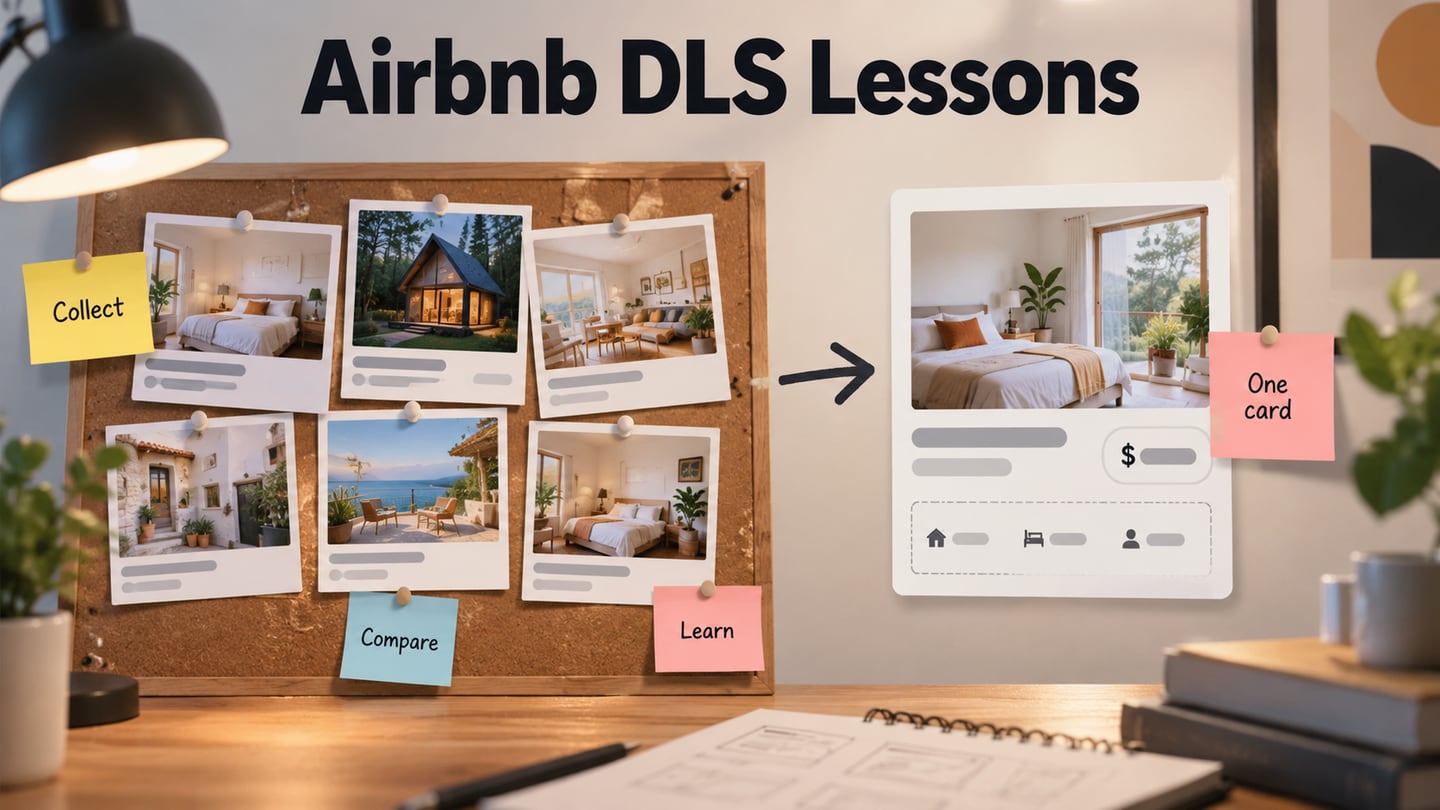
Airbnb’s Design Language System (DLS) is a useful case study in building a shared visual language for a product team. The public account explains how the team organized principles and reusable components; it is not a public drag-and-drop design-system builder. Read it alongside the broader design-system framework to separate reusable lessons from Airbnb-specific implementation.
The 2016 account by Airbnb designer Karri Saarinen describes work that began with native iOS and Android products. Treat its tools and process as historical context, not a current inventory of Airbnb’s internal system. You can apply its component and documentation lessons without access to private Airbnb files.
What Is Airbnb DLS, and What Does It Help With?
DLS brought a shared visual language and reusable product components into a common system. The published case describes an audit of existing interfaces, agreement on foundations and the construction of components that could serve recurring product needs. The point was not merely to collect colors and icons, but to make design decisions coherent across the experience.
A style guide describes presentation rules; a component library supplies reusable parts. A design system connects those resources with principles, usage guidance and implementation work. Airbnb’s case is especially useful for its emphasis on component composition and required versus optional elements. It does not provide evidence that an outside team can download and use every internal component.
Four Practical Benefits of a Shared Language
1. Clearer Communication
Shared names help designers and developers discuss the same component rather than several almost-identical screen fragments. A documented component can state its purpose, required content and allowed variations, giving review conversations a more concrete reference.
That reference only remains useful when a team maintains it. Record who owns a component, how changes are reviewed and which version an implementation follows. Calling a library a single source of truth does not automatically remove ambiguity or keep design and code synchronized.
2. Less Repeated Design Work
Reusable parts let a team spend less time redrawing established patterns and more time on the new problem in a flow. Airbnb’s published process illustrates this goal, but it is not a promise that another team will achieve a particular speed. Reuse works best when the component fits the task; forcing an unsuitable pattern can create more exceptions than it saves.
3. More Explicit Decisions
The DLS account identifies four guiding principles: unified, universal, iconic and conversational. Their value lies in making design intent discussable. A team studying the case should translate the relevant principle into an observable decision, such as consistent spacing or clear conversational labels, and explain when a different approach is justified.
4. More Consistent Components
An inventory makes duplicate patterns easier to spot. Consistency then depends on a component’s structure, behavior and content rules as well as its appearance. Two lodging cards can use the same typography and still behave differently if one opens details and the other unexpectedly starts a booking. Document that interaction boundary.
How to Apply the DLS Lessons
1. Audit the actual product. Collect screens from the flow you want to improve and identify repeated elements. Airbnb’s account began with existing product work; for your team, a search-results flow is a manageable scope. Note where apparently similar components have different content or behavior.
2. Establish foundations. Agree on the relevant typography, spacing, color and imagery rules before assembling a library. Describe the role of a value rather than copying Airbnb’s visual identity. Your product should retain its own brand and meet its own reading and interaction needs.
3. Build from recurring patterns. Choose one useful component instead of drawing every conceivable variant. A lodging-result card might require a name, rate and primary action, with a photo or detail text where the task needs them. Separate the repeated structure from content that changes per result.
4. Identify required and optional parts. This distinction is a concrete lesson from the DLS case. Define what must remain present for the card to make sense and what can be omitted. If optional details disappear, check that the remaining information still supports a decision and that the action keeps the same meaning.
5. Organize components by useful roles. The historical account grouped components into areas such as navigation, content, imagery and specialty components. Choose names that help your own team find and understand a pattern. A category should express a real purpose rather than hide unrelated elements under a convenient label.
6. Document the boundaries. Show the component with realistic long names, missing optional content and narrow widths. Explain where it should be used and when a different pattern is preferable. If you also maintain code, document its implementation separately; a visual library is not automatically a production component package.
7. Review design and implementation together. Give a developer the required fields, optional fields, action behavior and edge cases. Compare the implemented result with those decisions. Record intentional differences, such as platform conventions, so they are not mistaken for accidental drift.
8. Maintain access and ownership. Decide who can propose, approve and publish changes to your own library. Airbnb’s internal access model is not an instruction for your workspace. For a public system with implementation resources, the Carbon workflow provides a useful contrasting case.
Prototype a Reusable Lodging Card
Use Mockitt prototyping to compare a compact lodging-result card with an expanded version. Keep the lodging name, rate and primary action in both; make the additional description optional. This illustrative exercise applies a component-composition lesson from the case study without claiming to import Airbnb’s private DLS.
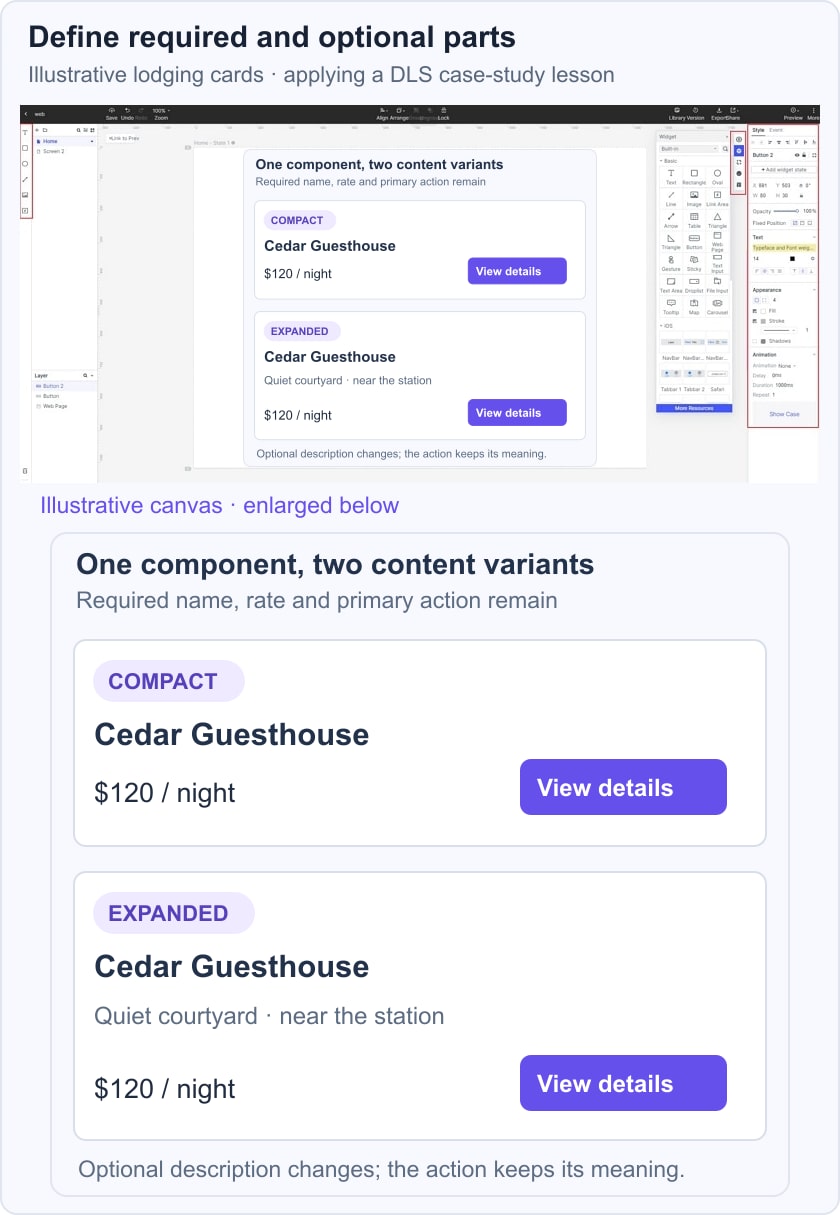
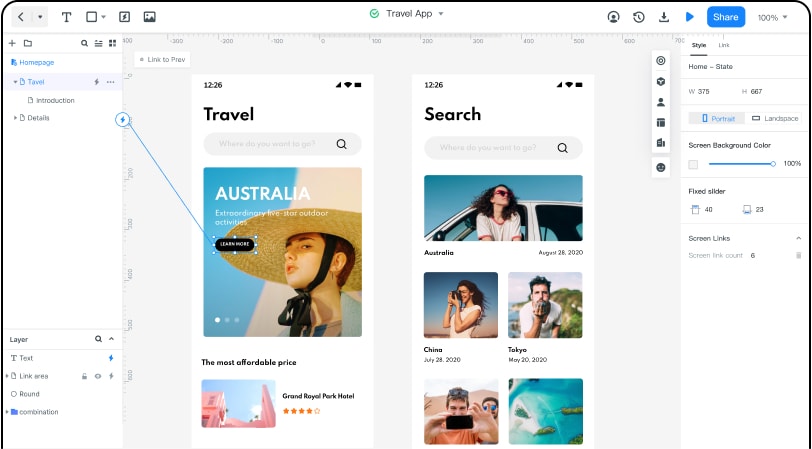 Historical Mockitt editor capture; interface details may differ from the current product. This is not an Airbnb DLS capture.
Review whether the same action remains recognizable in both variants and whether the compact card still contains enough information to choose a result. Link the card to a simple detail screen if the review needs to evaluate the transition. The prototype makes the proposed behavior visible; it does not verify a production booking integration.
Share the example with the people responsible for content and implementation. Ask them to review required fields, optional fields and exceptional cases rather than approve only the visual treatment. Set workspace access according to the available controls and your team’s needs; verify current plan details before making an access or licensing decision.
Keep the accepted card, its variants and a short usage note together. When requirements change, revisit the decision that made a field optional or required. This produces a small, understandable component reference that can grow from real product work instead of a library filled with untested variations.