Why is this worth solving?
Describe the business context and the problem people face today. Separate what you know from what you still need to confirm, so assumptions do not become conclusions.
Mockitt AI · Product Planning
Turn your idea into
a plan your team can discuss.
Bring your business goals, user scenarios, and first-release scope together in a clear product plan. Refine the draft as you work through assumptions and trade-offs with your team.
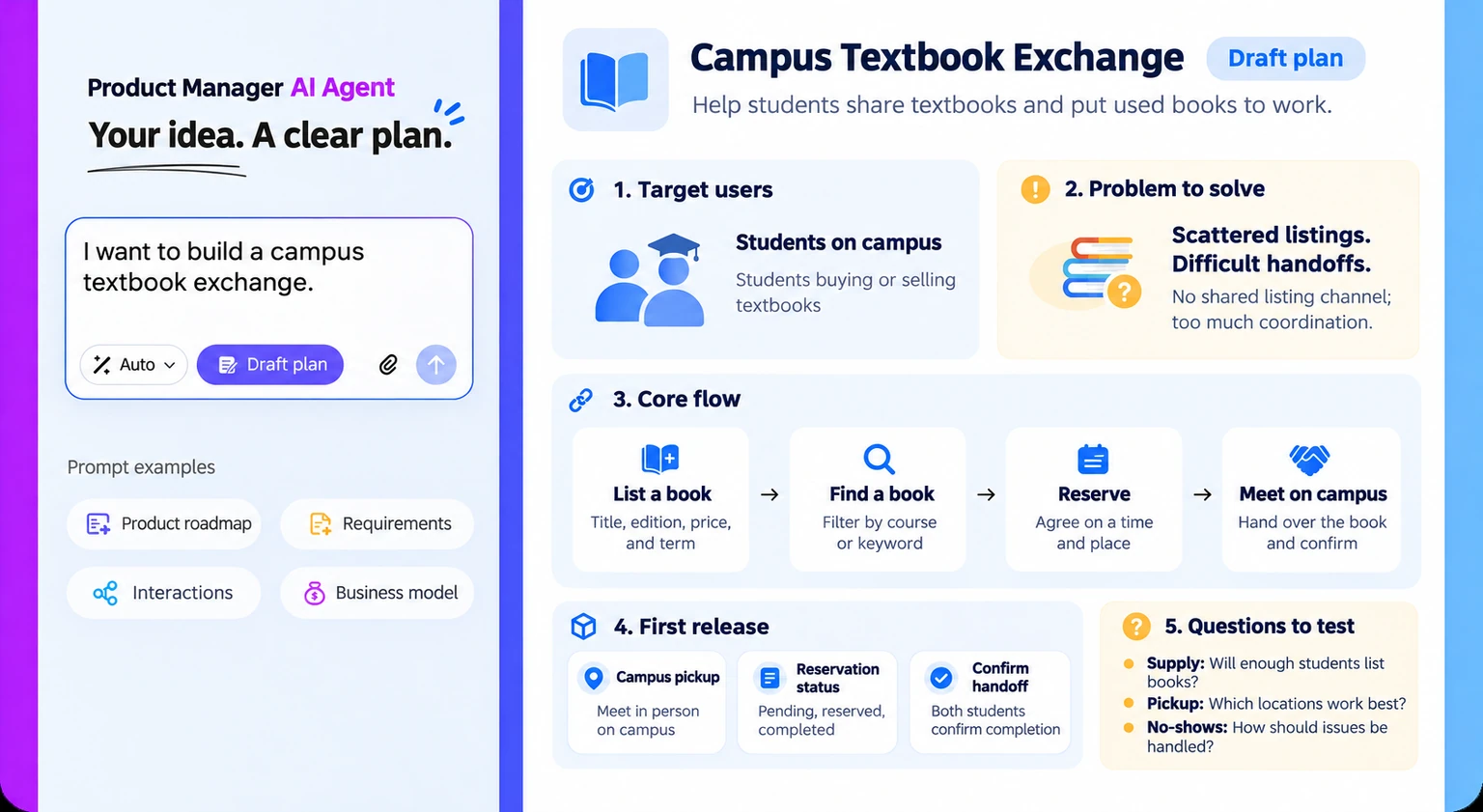
Set the direction
A product plan does more than expand on an idea. It connects the problem, the people affected, the proposed solution, and its scope, so your team knows what to discuss and where more evidence is needed.
Describe the business context and the problem people face today. Separate what you know from what you still need to confirm, so assumptions do not become conclusions.
Identify the users, their tasks, and the circumstances in which they work. The same need may call for different approaches across roles and settings.
Map the essential steps and capabilities from the user's starting point to the outcome. Give every proposed feature a clear purpose in that flow.
Separate what is included, what is deferred, and what still needs validation. That gives your requirements document and product planning a clear starting point.
Start with the work in front of you
You have an idea for a service or tool, but not a complete plan.
Feedback is piling up, and you need to decide which problem to address next.
You are replacing manual records with an online workflow and need to agree on an approach.
From a broad idea to a focused first release
"Build a used-book platform" leaves a lot open. Specify the campus, the users, and how books change hands, and the first release becomes easier to define. This example is a proposal for discussion; its business assumptions still need testing.
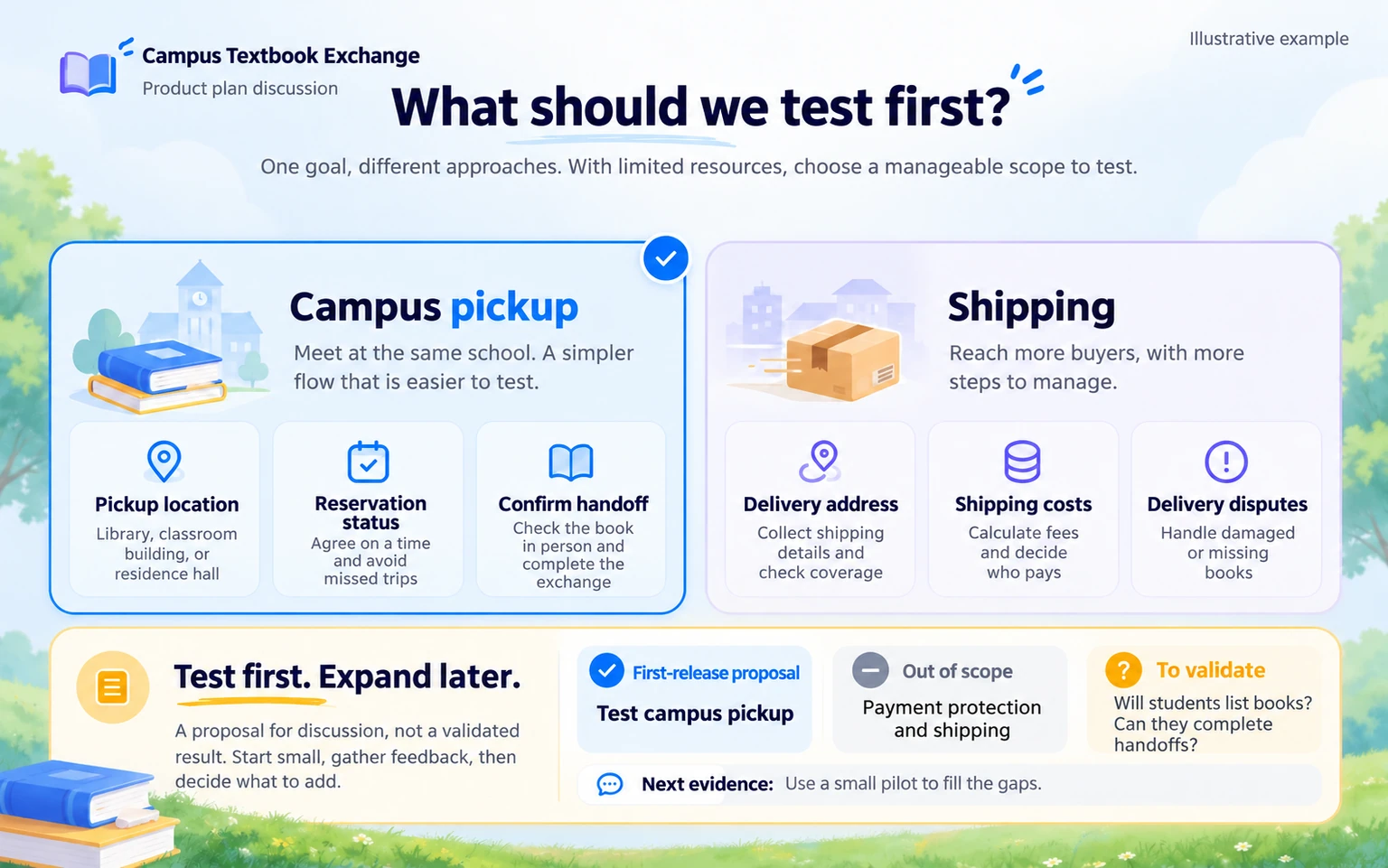
Start with book listings and reservation status so buyers and sellers know what happens next. Interviews and a small pilot can help establish whether this addresses the problems students actually face.
Book listings and search, reservation status, on-campus pickup details, and handoff confirmation.
Shipping, payment protection, and transactions across campuses. Each introduces additional fulfillment and dispute-resolution needs.
How to handle cancellations and no-shows, which pickup locations are suitable, and whether identity verification is needed.
Work through the business model
Ask AI to organize your thinking about customers, value, channels, revenue, and costs, or to compare alternative approaches. Identify the evidence and the unknowns before deciding what research and data to gather next.
Which existing problem does it solve? What would it improve compared with the alternatives people use today?
Who supplies the content, who delivers the service, and who handles problems? Make those dependencies part of the plan.
Subscriptions, commissions, and other models all need testing. Without supporting data, leave revenue and conversion forecasts open rather than inventing figures.
Give your first draft a useful foundation
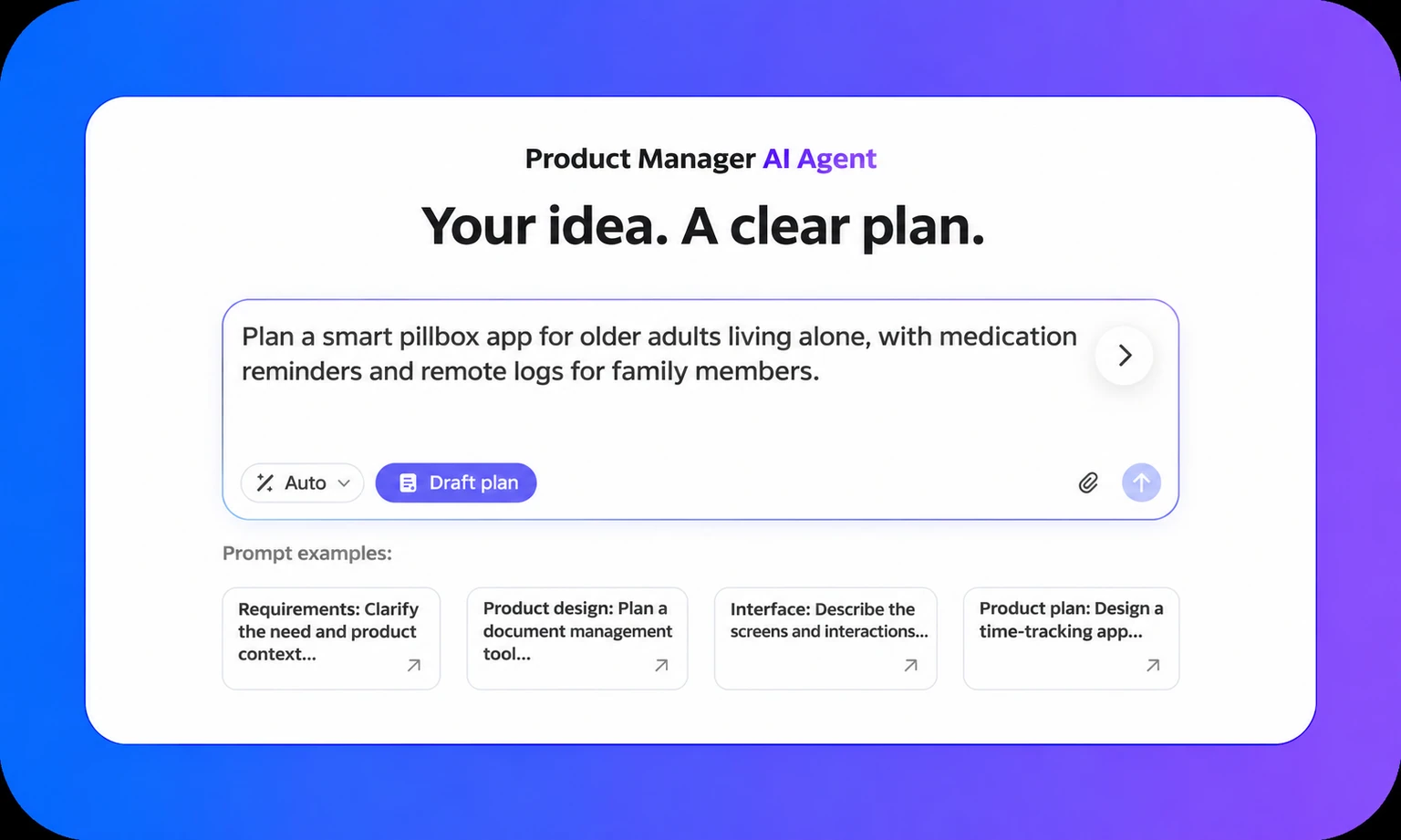
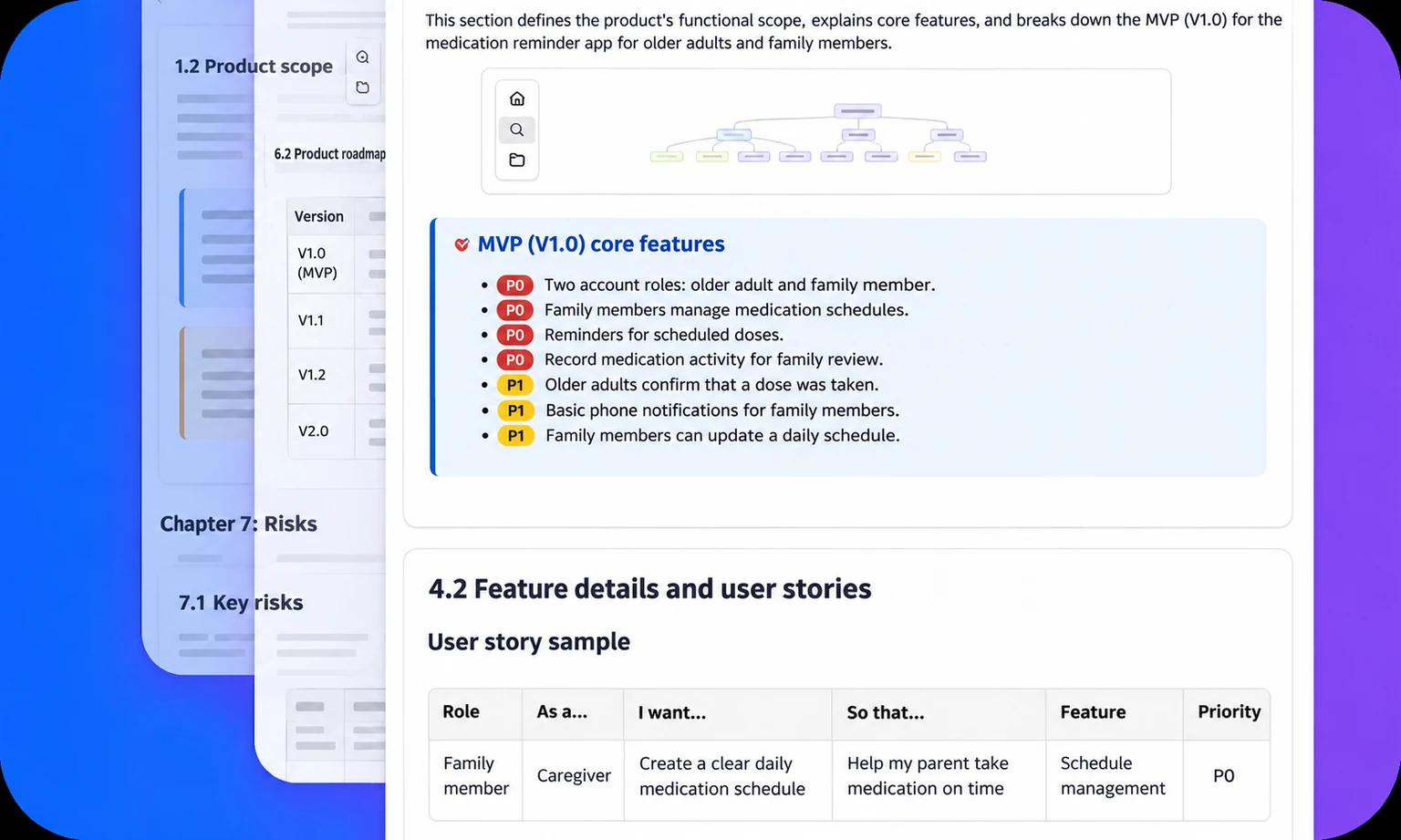
Copy this example and replace it with your users, problem, and constraints. Be specific about what you know and flag what you do not. Let AI organize the material, then use follow-up questions to develop it.
Keep refining in Mockitt AI
Open the product planning task and describe your users, goals, known information, and constraints. If details are missing, ask AI to list the questions it needs answered first.
Check that the proposed solution addresses the problem. Add scope boundaries, alternatives, and open questions, then narrow a broad plan into something your team can discuss.
Share the draft or use a Markdown copy to structure the discussion. Add evidence and team decisions before moving into requirements, prototypes, or delivery planning.
Once the direction is agreed
Different stages call for different materials. Resolve the question in front of you, then carry the decisions you have confirmed into the next step.
FAQ
It is useful when you have an idea or a business problem and need to organize the goals, users, proposed solution, and scope. Specific input makes the first draft more useful for discussion. If the user problem is still unclear, begin with interviews, feedback, or product research.
A product plan explains why to build, who it is for, which approach to take, and how far this release should go. A product requirements document, or PRD, adds specific features, business rules, flows, and exception handling. Agree on the plan first, then use the selected scope as input for an AI-assisted PRD draft.
Yes, but add at least the target users, the situation they face, and any known constraints. Ask AI to identify missing information, then supply it as you refine the draft. This helps keep assumptions from filling the gaps in the document.
Yes. Based on your goals and constraints, AI can help organize first-release trade-offs, possible revenue models, and cost questions. These are proposals to discuss, not proof of demand, conversion, or profitability. Test the key assumptions with real feedback and data.
Yes. Continue the conversation to add constraints, revise sections, or compare approaches, and use Mockitt AI's sharing feature to discuss the draft with others. The product guide describes Markdown downloads for drafted plans; the available file options and controls depend on the current interface.
Use it as a starting point. Before submitting it, check the business facts, budget, staffing, risks, and key assumptions, add supporting evidence, and have the responsible team review it. A well-structured document does not mean its business judgments have been validated.
Give your next discussion a clear starting point
Start with a goal, a user, and one core task.