Why this matters
Name who you serve, what is blocking them, and what should change. This keeps the roadmap from becoming a wish list of features.
Mockitt AI · Product planning
From one goal to a clear next step.
Start with direction
A product roadmap connects outcomes, stages, and key initiatives. Discuss the problem and sequence first, then turn confirmed scope into delivery tasks and dates.
Name who you serve, what is blocking them, and what should change. This keeps the roadmap from becoming a wish list of features.
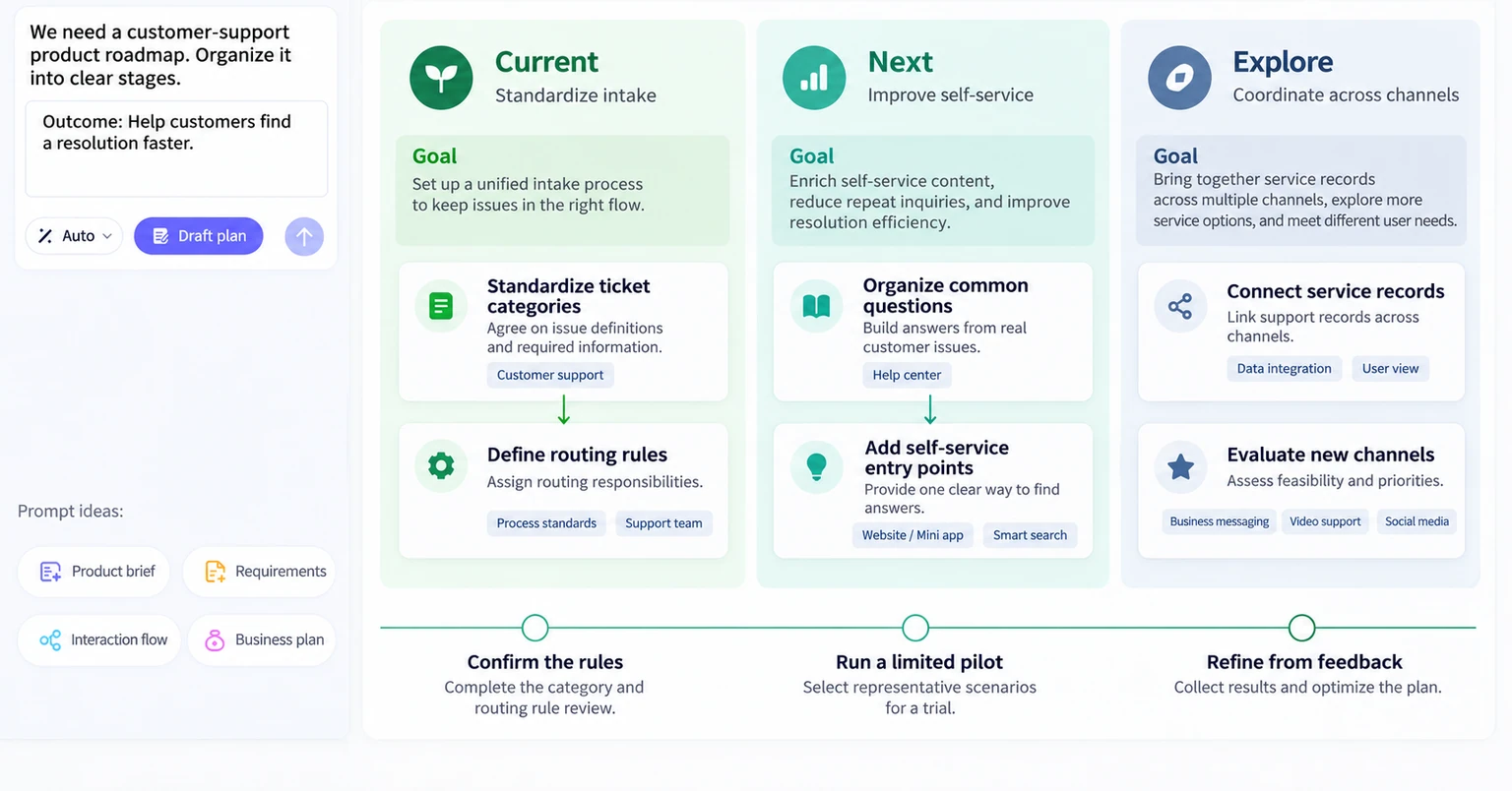
Use Current, Next, and Explore to show confidence. Separate this stage from work you are not ready to fund yet.
Add prerequisites, owners, and open questions to each initiative so the sequence has an explicit basis.
Customer support product · worked example
Suppose a team wants customers to find a resolution faster. The example below groups stages by outcomes and dependencies; actual investment still depends on customer feedback and team capacity.
Capture and route every issue consistently.
Agree on issue definitions and required information first.
Watch: Are sampled issues categorized consistently?Depends on stable category definitions.
Watch: Why are issues routed more than once?Give frequent questions a clear path to an answer.
Fill gaps using real customer questions.
Watch: Does the answer solve the problem?Confirm who owns content maintenance first.
Watch: Feedback from a limited rolloutEvaluate expansion after the foundations are proven.
Discuss identity and record definitions first.
Watch: Does tracking remain continuous across channels?Decide using the results from the first two stages.
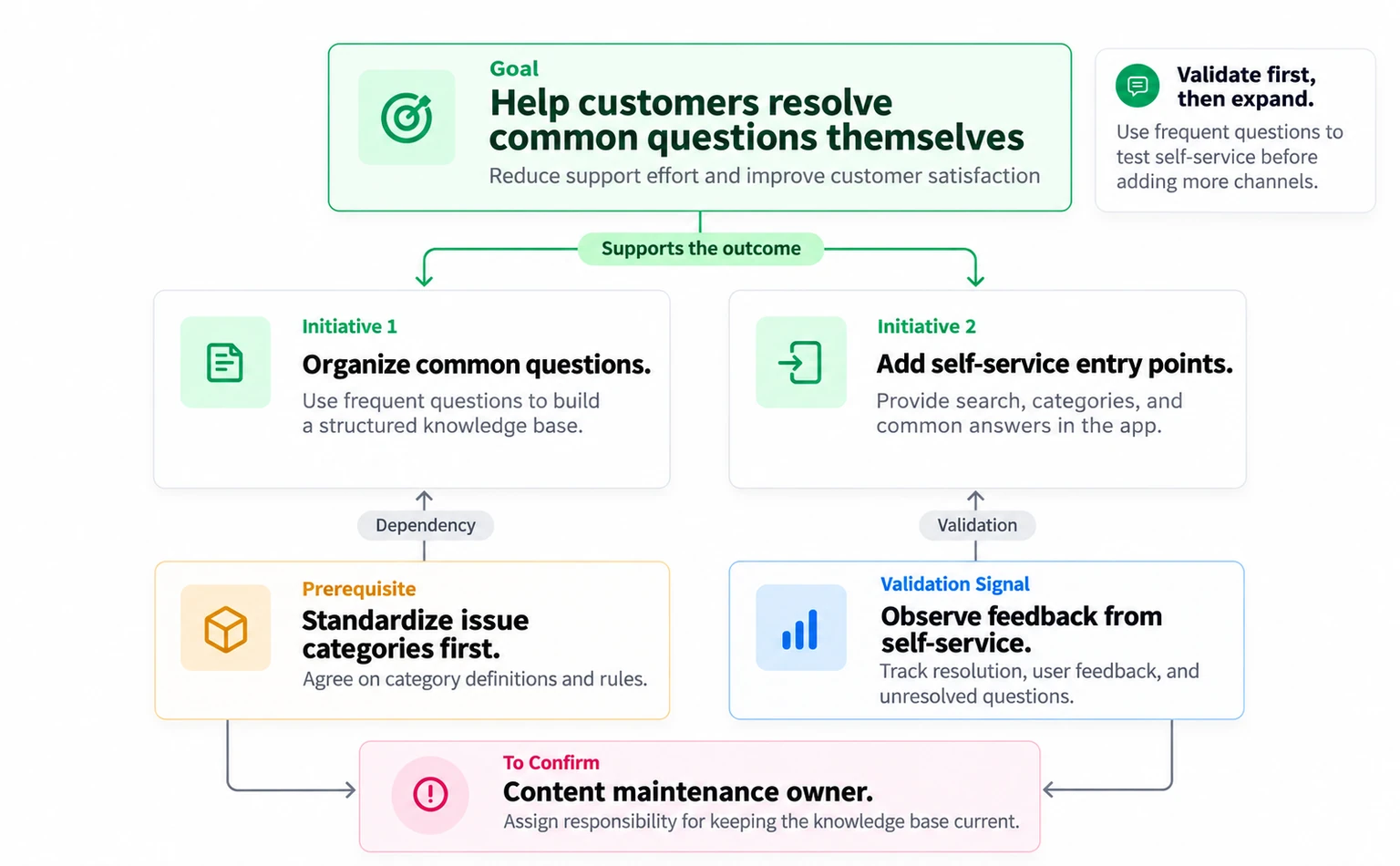
To confirm: capacity and business priorityKey dependenciesCategory definitions → routing rules; common-question content → self-service entry points. Put each relationship beside the related initiative.
Ask what needs to be true
“Add self-service entry points” is an initiative. “Can customers find answers more easily?” is the question to validate. Putting both together makes scope and trade-offs easier to review.
Give AI the context and constraints
Open the roadmap generator and describe your users, evidence for the problem, planning scope, and known constraints. Ask AI to list unknowns, then refine the brief before you review the draft.
Who does the product serve, and what problem matters most now?
What comes first, what is out of scope, and what capacity limits apply?
Check outcomes, initiatives, dependencies, and validation one by one. Remove promises without evidence.
Choose the right level of detail
Discuss why to invest, stage outcomes, scope, and dependencies. Use it while the plan still has uncertainty and needs team alignment.
Once scope and capacity are clear, break work into tasks, owners, dates, and delivery checkpoints. Estimating duration still requires implementation and capacity judgment.
“Next” on a roadmap expresses sequence. Before committing to dates externally, confirm scope, dependencies, capacity, and risk.
Give review a shared object
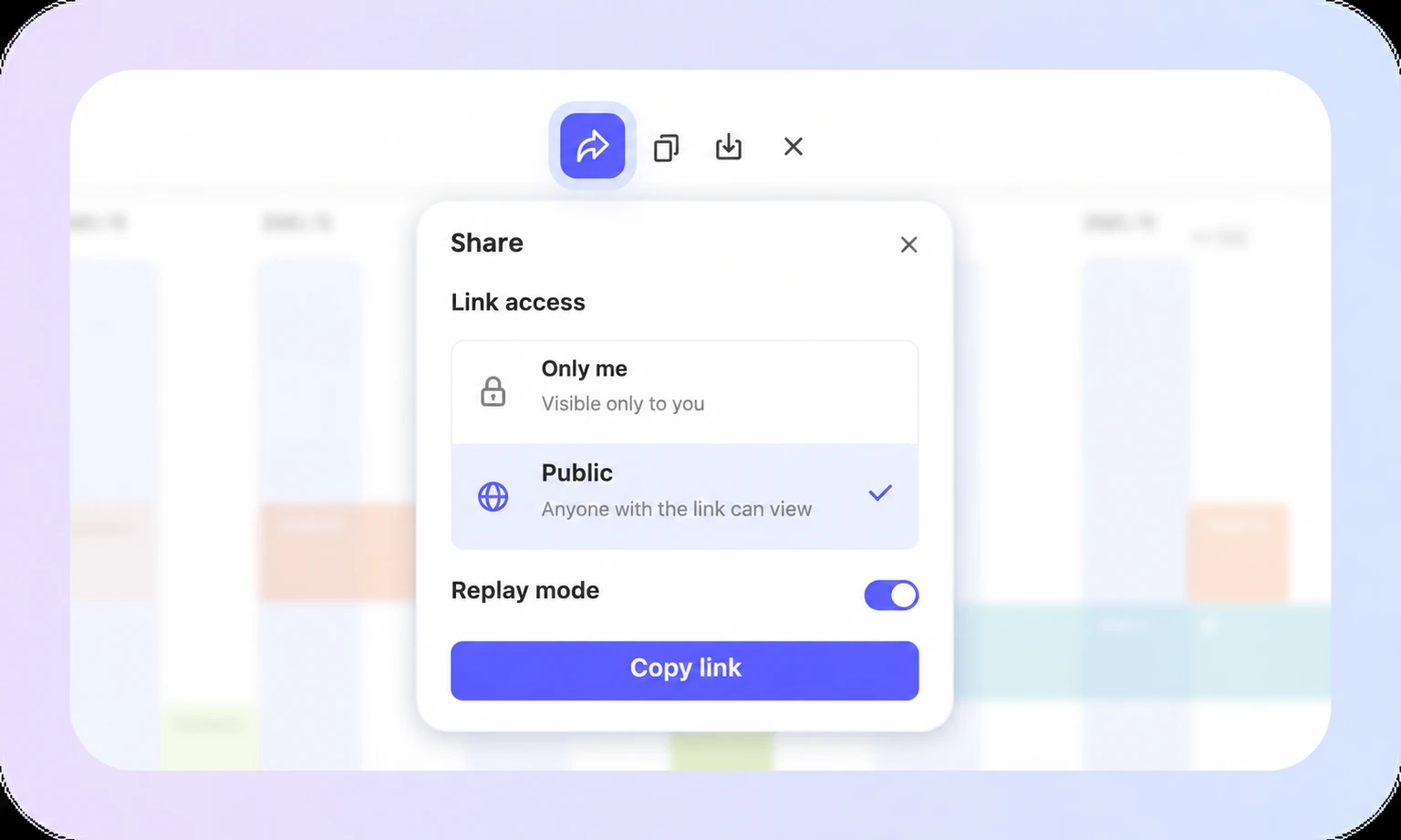
Keep refining the roadmap content and order, then share one version for the team to review. Anchor disagreements to a stage and record the decision, reason, and open questions.
ProductConfirm outcomes and priorities; explain what is deferred.
Design and engineeringAdd feasibility, key dependencies, and delivery risks.
Business stakeholdersConfirm validation, capacity, and the boundaries of any commitment.
Keep improving the plan
Understand common types, core elements, and update practices.
↗Planning and feedbackConnect goals, feedback, and practical team decisions as the plan evolves.
↗Evidence and opportunitiesConnect a desired outcome to customer needs, possible solutions, and the next test.
↗Uncertainty and sequencingPrioritize uncertainty and choose the next prototype slice before committing to delivery.
↗Common questions
Start with the target users, problem, current stage, planning scope, and known constraints. Include known dependencies and out-of-scope items. Ask for stage outcomes, initiatives, dependencies, and validation signals; keep missing information as to be confirmed.
A product roadmap centers on outcomes, stages, and initiatives so a team can align on direction and trade-offs. A Gantt chart tracks decomposed tasks, owners, and dates. A roadmap can inform scheduling, but it cannot replace capacity or duration estimates.
AI can organize candidate order and planning suggestions from your input, but generated text cannot fill missing business data, capacity, or delivery risk. The team must confirm priorities, owners, and dates.
Explain the change and its impact, then review the related outcomes, stages, dependencies, and validation signals. Record initiatives that were added, deferred, or removed and why, so the team understands the basis for the change.
Your next product direction