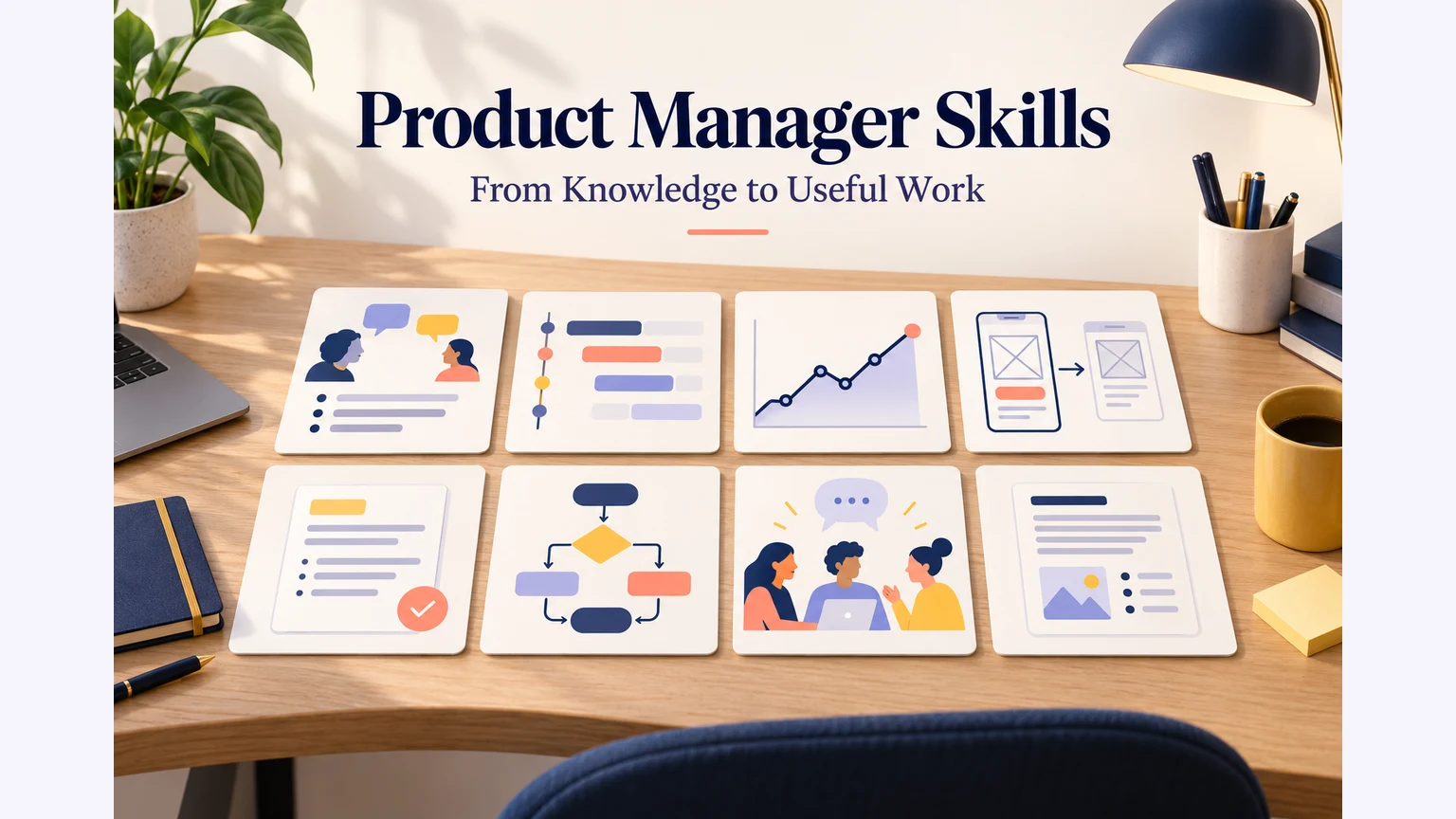
The most useful product manager skills combine clear communication, analytical judgment, customer understanding, prioritization, technical fluency, and the ability to work across teams. You demonstrate them through decisions and useful work, not by collecting a long list of tools. The eight skills below connect those abilities to practical examples and artifacts.
The product manager’s role brings customer needs, business goals, and delivery constraints together. A junior PM may contribute research and analysis; a more experienced PM may own broader trade-offs. In either case, the evidence of a skill is what the team can understand or decide because of your work.
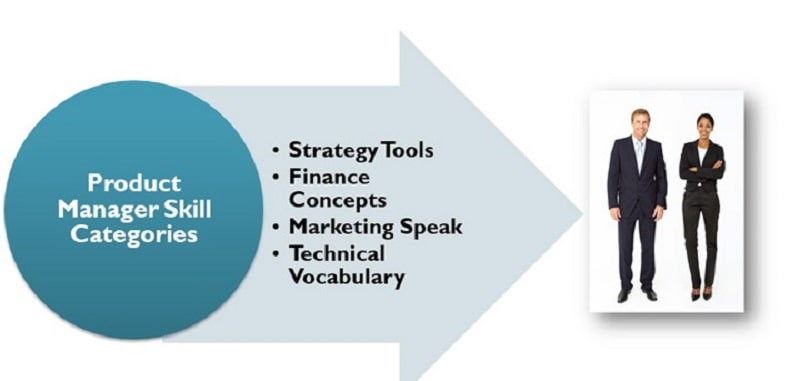
8 product manager skills to develop
Use these skills as a development guide, not a universal hiring checklist. The balance depends on the product, team, and level of responsibility.
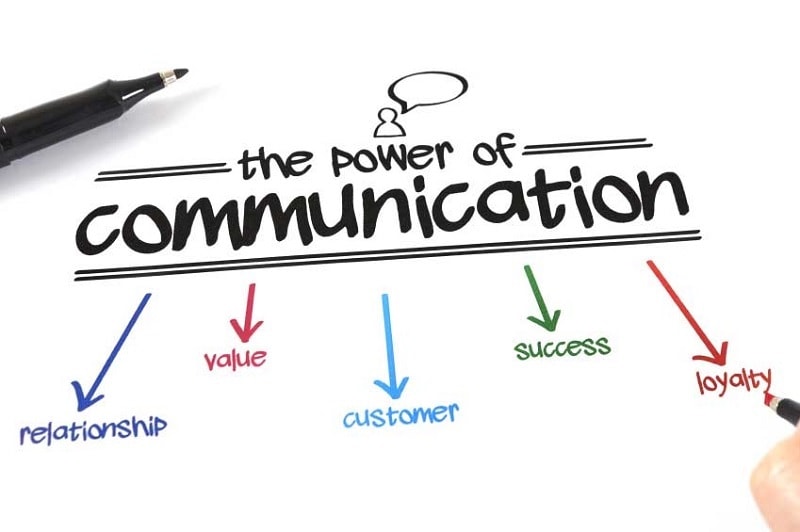
1. Effective communication
Product managers have to communicate with other employees in the organization. They must conduct meetings and convey ideas clearly enough for listeners to understand the problem and the decision required. Product managers need to adapt their communication to audiences at different levels in the organization. Good communication also includes listening: a concern from support or engineering may change the plan.
For example, “Users want a dashboard” is a request, not yet a shared problem. A clearer brief might say: “Team leads cannot see which requests are waiting for a response, so they open each item manually.” Bring a short problem statement, relevant observations, and a question the team needs to answer. Leave the meeting with a decision, an owner, or a specific unanswered question.
2. Fluency with the tools that support decisions
Product managers need enough tool fluency to gather evidence and communicate a proposed solution. Analytics tools such as Heap, Google Analytics, and GoodData can support this work, alongside direct customer research. Google Analytics measures interactions across websites and apps; GoodData provides analytics and business-intelligence capabilities. Choose a tool according to the question and the data available.
A prototype can make a proposed change concrete enough to discuss. With Mockitt’s prototyping tools, a PM can communicate a screen sequence and its intended behavior before implementation. The useful skill is deciding what to show and what question the prototype should answer, rather than producing a highly polished interface for every conversation.
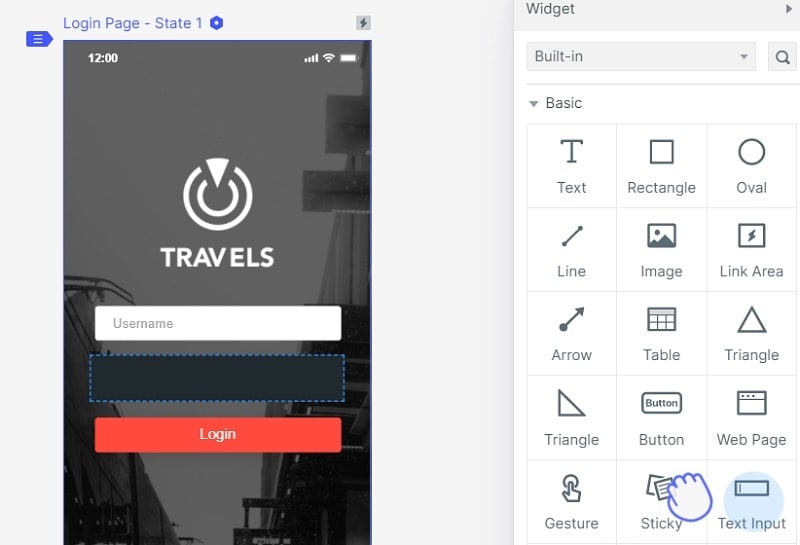
Useful prototyping capabilities include:
- Use built-in elements to sketch the controls and information a screen needs.
- Start from a suitable template when it matches the task, then adapt the content and structure.
- Customize reusable elements so repeated screens remain consistent.
- Connect screens and add interactions that demonstrate the proposed route.
- Preview the prototype with realistic sample content; a visual interaction does not implement the underlying service.
Example: communicate a request-status problem. A team lead needs to find unanswered requests. Build a short sequence with a request list, a “Waiting for response” view, and a request detail. Include an empty result so the discussion covers what happens when no items match.
Ask a colleague to find the oldest unanswered request without explaining the interface first. Watch which label they use and whether the detail screen provides the context they need. Keep the design question beside the prototype so feedback stays focused, then record where the proposed route was confusing.
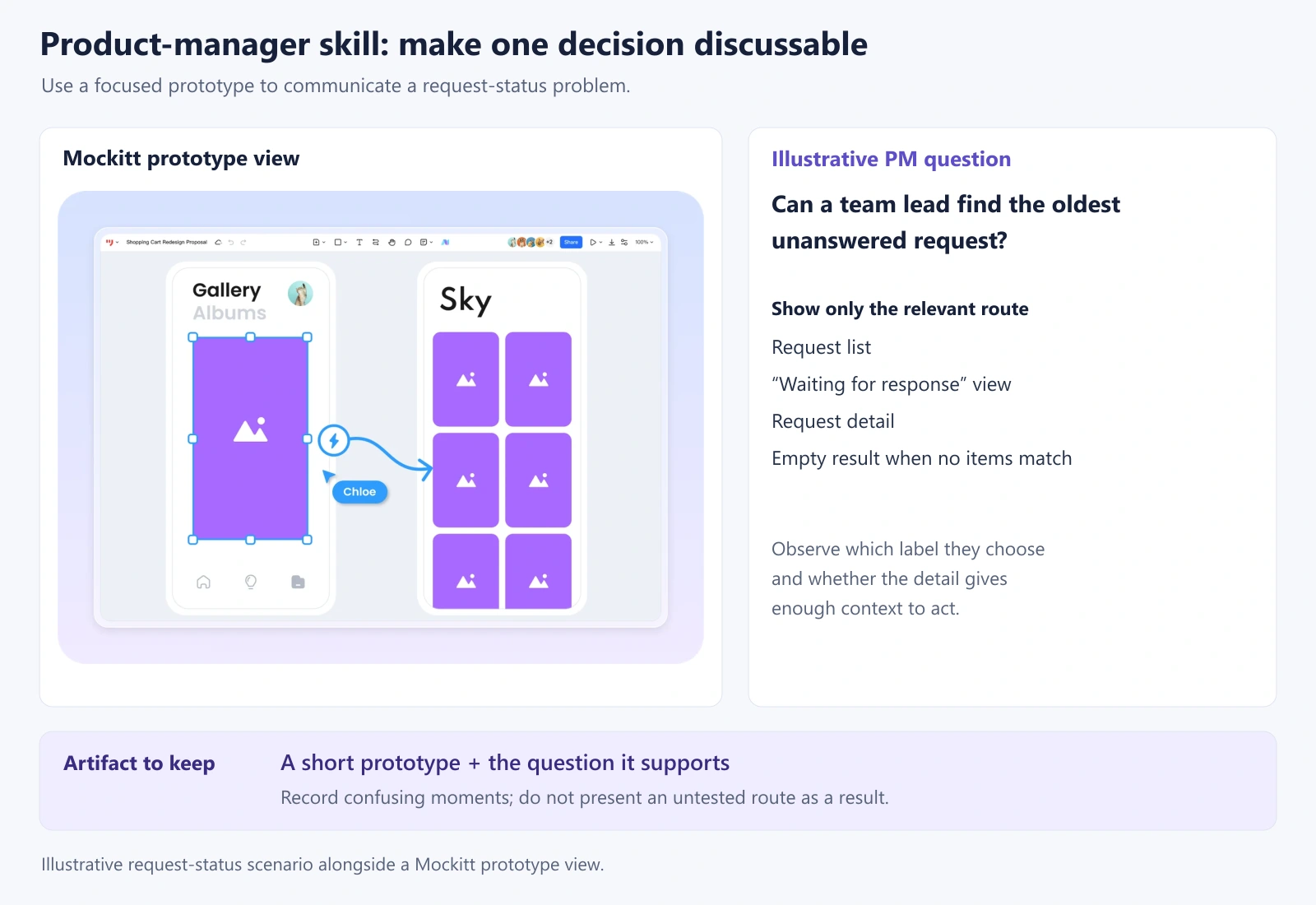
The artifact to keep is a small, understandable prototype with the question it supports. A long feature tour is less useful when the decision concerns one particular task.
3. Time management
Product managers must make time to interact with customers and understand their disappointments with a product. They also need time to discuss that feedback with management and explore its feasibility with technical experts. Protect time for this learning and decision-making; otherwise meetings and incoming requests can fill the week without moving the product forward.
Plan a week around a few outcomes: interview customers about a recurring problem, agree on the next experiment, or resolve a scope decision. Keep time for interruptions, but make trade-offs explicit. If an urgent request replaces a research session, decide when that learning will happen rather than silently dropping it.

4. Analytical judgment and clear ownership
Product managers analyze information from customers, management, and technical teams to decide how a product should change. They need analytical skills to evaluate solutions in relation to the business goal and vision. For a large project, a supportive team can share the responsibilities, but each task needs clear ownership. Agree on who does what instead of assuming everyone interprets a request in the same way.
A drop in completion might reflect a confusing form, a changed audience, or a measurement issue. Check how the data was collected and what population it represents. Write down the observation separately from your explanation, then identify the smallest next check that could distinguish those possibilities. A useful analysis ends with a decision or a better question, not just a chart.

5. Strategic thinking
Product managers work with other teams in an organization to improve the product. A strategic approach connects a near-term change to a larger product goal: which problem matters, who benefits, and what will be postponed? A strategy should help the team choose between plausible alternatives, not describe every useful feature as a priority.
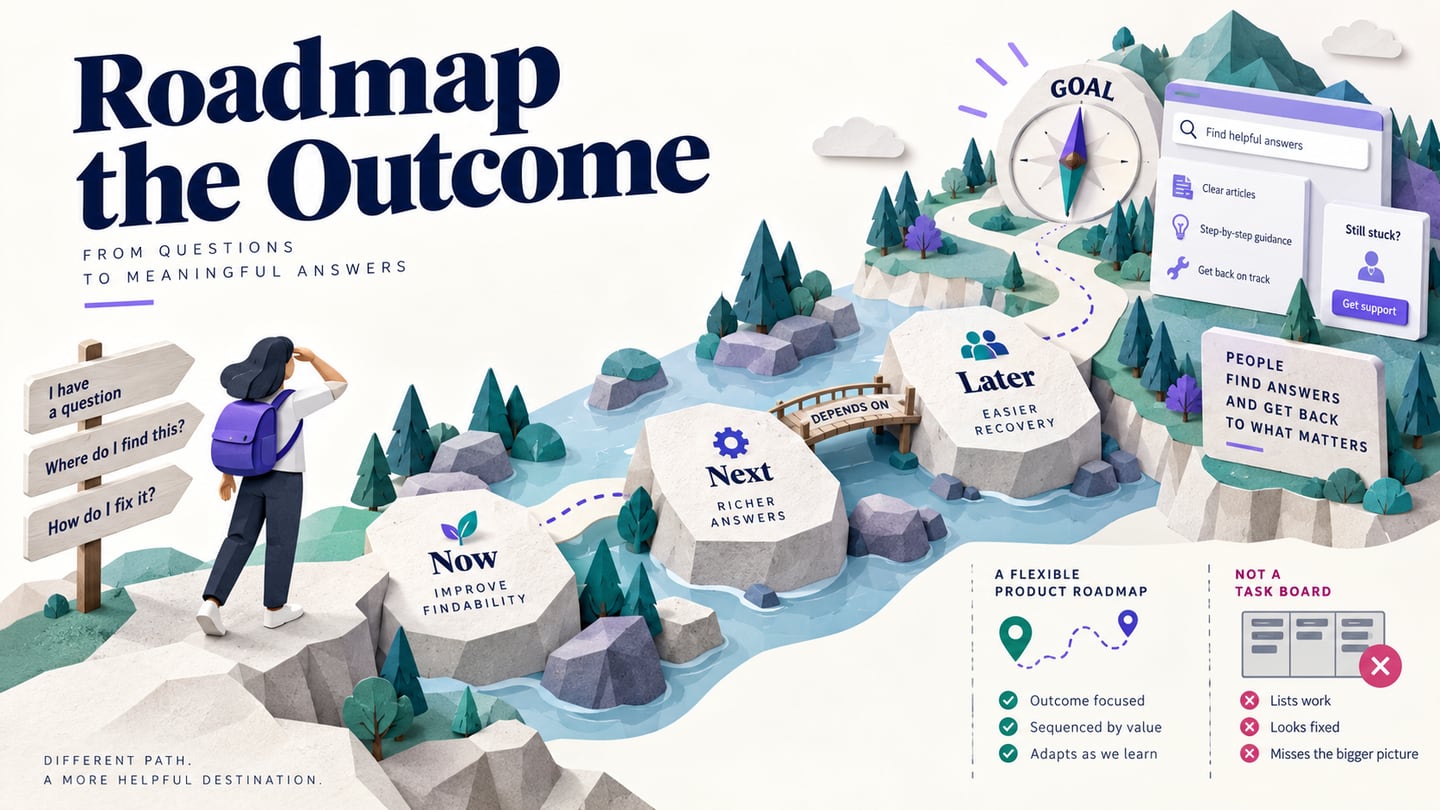
For the request-status example, adding more dashboard widgets may be less important than making unanswered requests visible. A short product roadmap can connect that outcome to a sequence of work, while leaving room to change the solution as evidence develops.
6. Technical fluency
Product managers need an understanding of how their products work. This helps them discuss proposed changes with the engineers who will bring the ideas to life. You do not need to write every implementation, but you should understand where data comes from, what can fail, and which dependencies affect a proposed experience.
Ask whether “Waiting for response” is a stored status or a value calculated from several events. Ask how quickly it updates and what happens if a request changes while someone is viewing it. These questions can reveal interface states the prototype should include, such as loading, stale data, or a failed update.

7. Influence and collaboration
Product managers need to motivate and work with people from different backgrounds. Influence comes from making the problem and trade-offs understandable, inviting relevant expertise, and following through on decisions. It does not require persuading everyone to accept your original idea.
If support wants more detail and engineering wants a smaller first release, bring both concerns to the same decision. Which information does a support agent need to act? What is the simplest version that provides it? Record the agreed scope and revisit it when new evidence changes the trade-off.

8. Market and technology awareness
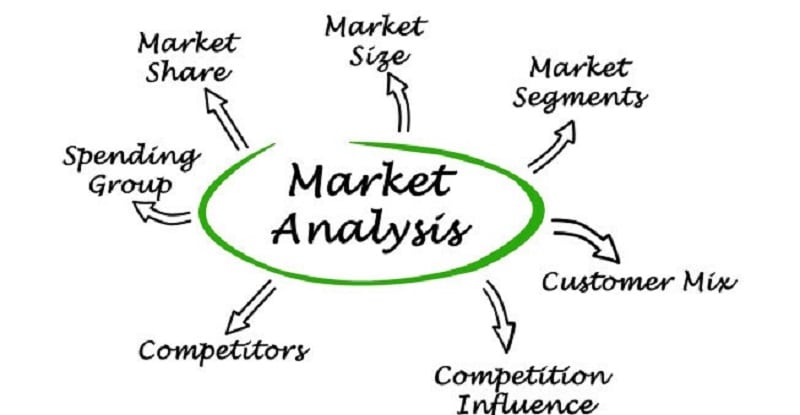
Product managers need to recognize changes in the market and stay aware of advances in technology. Connect these developments to the users and problems your product serves. A new technology is a reason to investigate, not automatically a reason to add a feature or predict a higher profit.
When a competing tool introduces an AI summary, ask what job it helps users perform, where the source information comes from, and how errors are handled. For your product, compare that opportunity with the unresolved request-status problem. The more impressive demonstration is not necessarily the more valuable next investment.
Turn skills into evidence of good product work
Pick one skill to practice on a real, bounded problem. A clear brief demonstrates communication; a well-framed analysis demonstrates judgment; a focused prototype makes a proposed experience discussable. Review the result with your team, identify what helped them act, and use that feedback to choose the next skill to develop.