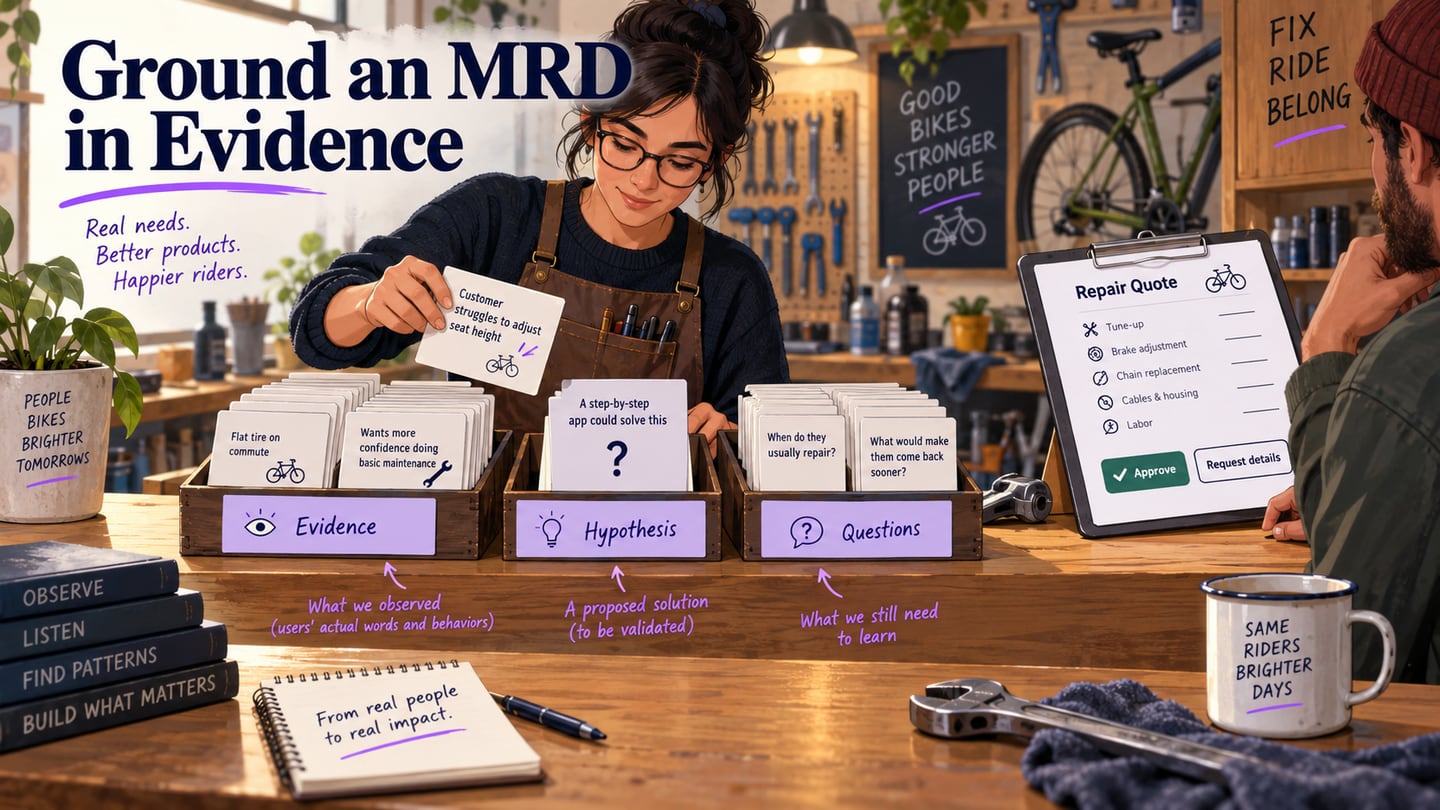
A market requirements document (MRD) explains the market opportunity, the people or organizations affected, and the evidence behind a proposed product direction. It helps a team decide what is worth investigating before committing to detailed product requirements.
ChatGPT can organize research and draft sections of an MRD, but it cannot replace customer evidence or invent market figures. This guide follows the original MRD structure and prompting steps using an illustrative opportunity: helping independent repair shops get clearer customer decisions on repair quotes. The scenario is not a report of completed research.

An MRD brings together customer needs, market context, competing alternatives, and the proposed value of a product. Aha!’s MRD guidance grounds this document in market research. Keep conclusions traceable to that research and revisit them as evidence changes.
Why Is a Market Requirements Document Necessary?
Teams use different levels of documentation. Whether the MRD is a short shared brief or a longer document, it should make the opportunity, supporting evidence, assumptions, and next decision clear. A template helps organize the work; it does not validate a market.
Here are some specific purposes for writing a marketing requirements document:
- Clear prioritization. With an MRD, you can identify potential gaps in the market that a product can fill. It helps divide limited resources better in the long run.
- Shared context: keep the same research references visible to product, marketing, and other reviewers so they can question assumptions rather than repeat conflicting summaries.
- Decision quality: compare alternatives using evidence and constraints. A written MRD does not guarantee a successful launch or an advantage over competitors.
Seven useful sections in an MRD
Adapt these sections to the decision being made. For the repair-shop example, focus on the quote-approval task and buyer context rather than filling every section with generic industry commentary.
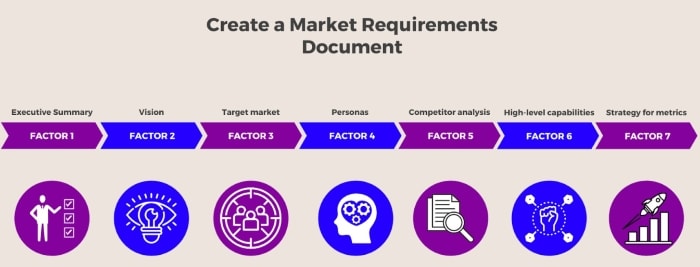
- Executive summary: state the opportunity, strongest evidence, main uncertainty, and decision requested. Write this after the other sections so it reflects the actual research.
- Vision: describe the proposed value, such as helping customers understand and respond to a repair quote. Label this as the product direction being evaluated.
- Target market: define the relevant segment and geography. For any size or growth figure, record its source, date, method, and limitations. If evidence is missing, leave the estimate unresolved.
- Customers and users: distinguish the shop owner who might buy a tool, the staff member sending a quote, and the customer responding. Build profiles from research rather than invented demographic detail.
- Alternatives: include existing software and the current workaround, such as a call, email, or printed estimate. Record verified capabilities and the task each alternative serves.
- High-level capabilities: describe what may address the opportunity, such as viewing an itemized quote and requesting clarification. Do not turn untested ideas into committed feature scope.
- Measures and validation: define what evidence would support or weaken the opportunity. Keep proposed measures separate from actual results and have owners agree targets before using them.
An MRD and a PRD answer related but different questions. Use the MRD to examine the opportunity and the PRD to define a selected product change. Teams may develop and revise them iteratively rather than following a fixed handoff sequence.
|
Market Requirements Document (MRD) |
Product Requirements Document (PRD) |
|
|
Purpose |
To identify and document market needs and requirements for a product |
To document the specific product functionality needed to meet the identified market needs |
|
Audience |
Typically used by product management and marketing teams |
Typically used by product development and engineering teams |
|
Contents |
Market analysis, customer requirements, product vision, revenue potential, etc. |
Wireframes, mockups, user stories, release details requirements, etc. |
|
Focus |
External market and customer needs |
Agreed product behavior, scope, and acceptance criteria |
|
Scope |
A high-level overview of the market and customer needs |
Requirements for a selected product change; technical implementation may be specified separately |
|
Timeline |
Created during the early stages of product planning |
Developed and revised as product decisions become clearer; may evolve alongside market research |
For the repair-shop opportunity, the MRD asks which participants struggle with quote approval, what alternatives they use, and what evidence suggests a worthwhile problem. A later PRD specifies an agreed quote-review flow, permissions, and acceptance criteria.
Avoid reducing the distinction to “MRD says what; PRD says how.” Both contain context and decisions. The PRD is not necessarily the technical implementation plan. Keep links between evidence, product decisions, and later specifications.
Prepare source material before opening an AI conversation: interview or observation notes, current official competitor information, and any relevant market research you are entitled to use. Remove private material that should not be shared with the tool.
Create an evidence ledger with a source ID, date, segment, observation, and limitation. For example, an observed request for quote clarification is evidence; “all repair shops lose revenue because of unclear quotes” is a hypothesis unless supported. Unknown market size should remain unknown.
Benefits of Using ChatGPT To Create a Marketing Requirements Document
Use the assistant for bounded tasks that can be checked against the evidence ledger.
- Organize supplied notes under the appropriate MRD sections without adding new facts.
- Identify unsupported conclusions, conflicting sources, or segments that the research does not represent.
- Summarize an interview excerpt while retaining its source ID and the distinction between an observation and an interpretation.
- Suggest questions for follow-up research, clearly labeled as suggestions rather than findings.
How to Use ChatGPT to Generate Content for Each Section of the MRD
Draft one section at a time so reviewers can compare the output with its sources. Do not ask for a complete market assessment from a product name alone.
Step 1: start a conversation in your approved AI tool and explain the decision the MRD supports. In this example, the decision is whether the quote-approval problem deserves further product discovery.
Step 2: provide the evidence and boundaries. Ask the assistant to use only supplied source IDs, label hypotheses, and list unanswered questions. Include the following inputs when they are known:
- What is your product or solution?
- The relevant industry segment and geography, with a reason for focusing on them.
- Who is the target customer for your product?
- What are the primary customer needs that your product should address?
- Current alternatives and the sources used to describe them.
- Observed strengths, limitations, and switching barriers; separate observation from interpretation.
- Business constraints and proposed measures, with owners. Do not ask AI to invent revenue projections.
Step 3: request a first section and verify every factual statement. Ask the assistant to identify which evidence supports each conclusion and where it has insufficient information.
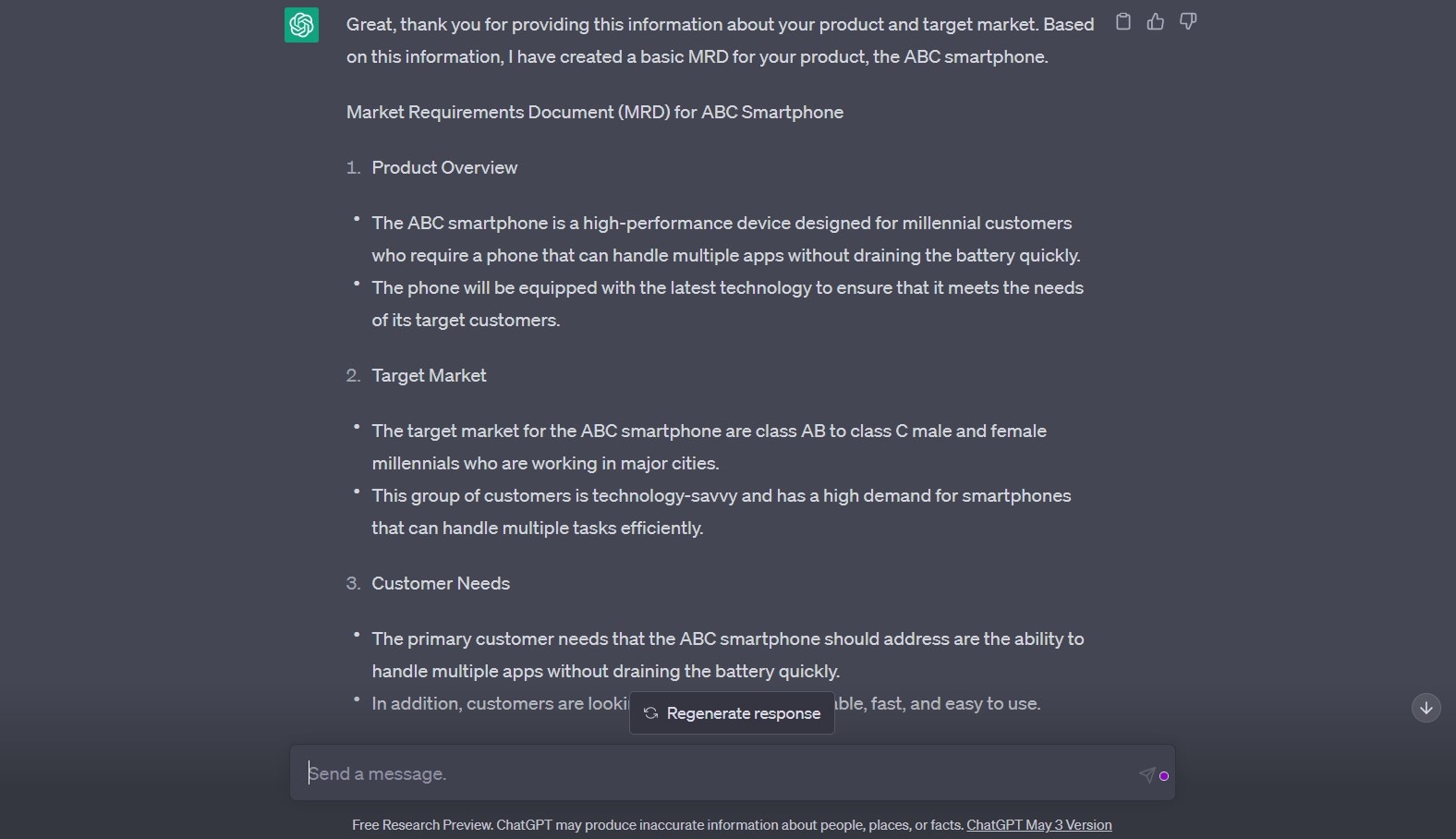
The retained ChatGPT screenshots are historical examples of formatting. Their sample smartphone claims and market numbers are not verified research and must not be reused as facts in an MRD.
Example Prompts for a Market Requirements Document in ChatGPT
These prompts continue the repair-shop example. Replace the placeholders with approved research; if a source is absent, the output should say so.
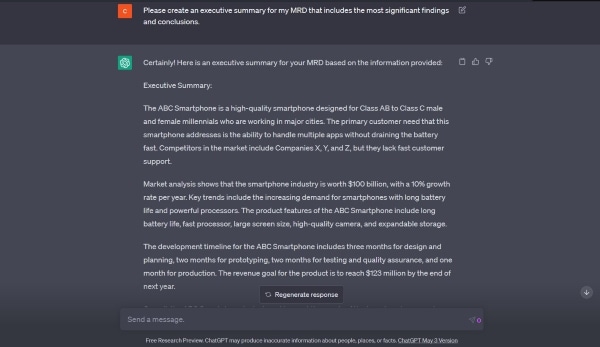 Historical generated example, not a market source. Its sample figures and claims are unverified.
- Summary: “Summarize the quote-approval opportunity using sources R1–R5. Separate supported findings, hypotheses, and open questions. Include no market figures absent from the sources.”
- Vision: “Draft a proposed value statement for the staff member sending a quote and the customer reviewing it. Explain which observed need supports each part, and flag unsupported benefits.”
- Customer context: “Group the supplied observations by buyer, staff member, and customer. Do not invent demographics or call these validated personas.”
- Alternatives: “Compare the supplied software and manual-workaround notes by quote visibility, clarification, approval record, and constraints. Preserve source IDs and mark missing information unknown.”
Like any other AI-powered tool, there are best practices to follow to ensure the best results. Follow these to maximize the potential of ChatGPT to capture your marketing objectives. So, let's dive into the best practices to help you start on the right foot.
1. Validate Generated Content
Check numbers, quotations, feature claims, and citations against their original sources. OpenAI notes that ChatGPT can produce incorrect information and references. Fluent wording and a formatted table do not make a market claim reliable.
2. Customize Prompts
Keep the prompt tied to a specific segment and decision. If a source concerns large service chains, do not silently apply it to independent shops. Ask what evidence is missing before requesting a stronger conclusion.
Tip:
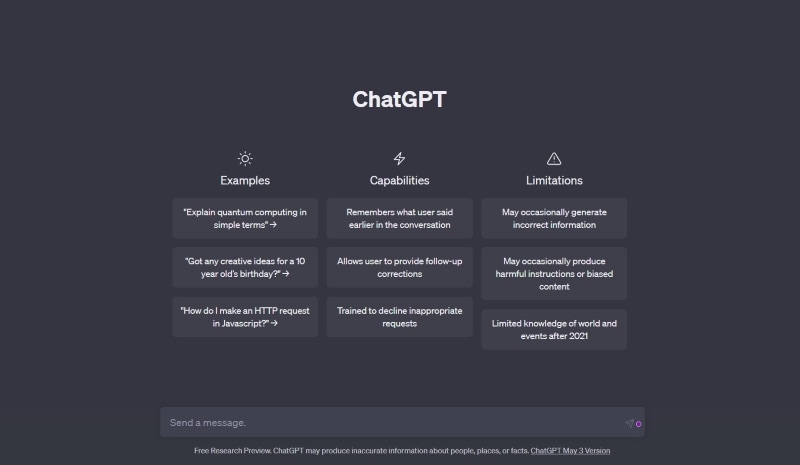
Use AI assistance to organize questions or draft labels when it is available in your workflow. The old Mockitt chat screenshot below is an interface example, not evidence of market research capability or a current usage allowance.
Do not infer current plan limits from a historical screenshot. Keep the market evidence and approved conclusions in the team’s shared document, with sources that reviewers can inspect.
Validate the opportunity with a prototype
Review the MRD with colleagues responsible for product, research, commercial assumptions, and feasibility. Then identify the next question that could change the decision. A prototype session can test understanding of a proposed task; it cannot establish market size or willingness to pay by itself.
For the repair-shop example, prototype the quote-review task in Mockitt: a customer receives a quote, reads the itemized estimate, and either approves it or requests clarification. Use clearly labeled sample data and the same terminology as the MRD.
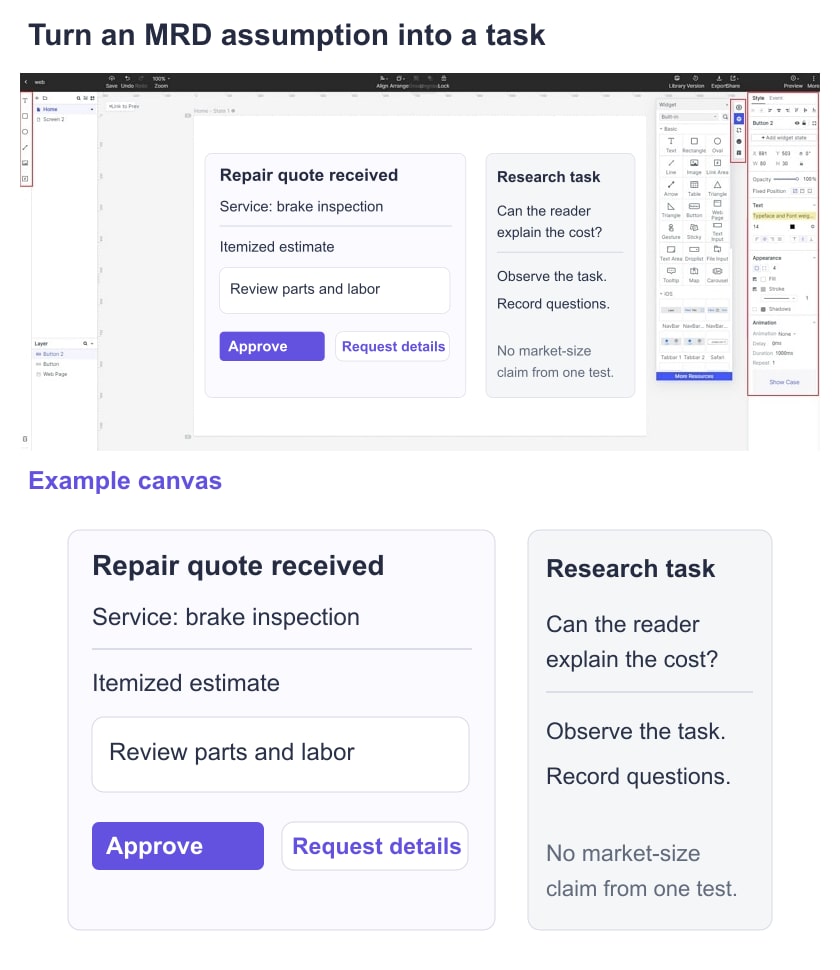
Ask a participant to explain the quote and choose a next action without coaching. Record observed hesitation and questions separately from your interpretation. Return those findings to the MRD with their scope and limitations; do not report an improvement until a suitable study measures it.
Conclusion
An AI-assisted MRD is useful when it makes evidence and uncertainty easier to inspect. Keep the seven sections proportionate to the decision and resist filling missing research with plausible text.
Move from the opportunity to a PRD only when the team has enough evidence to choose a product change. Preserve the sources, unanswered questions, and decision rationale so later design work stays connected to the problem.