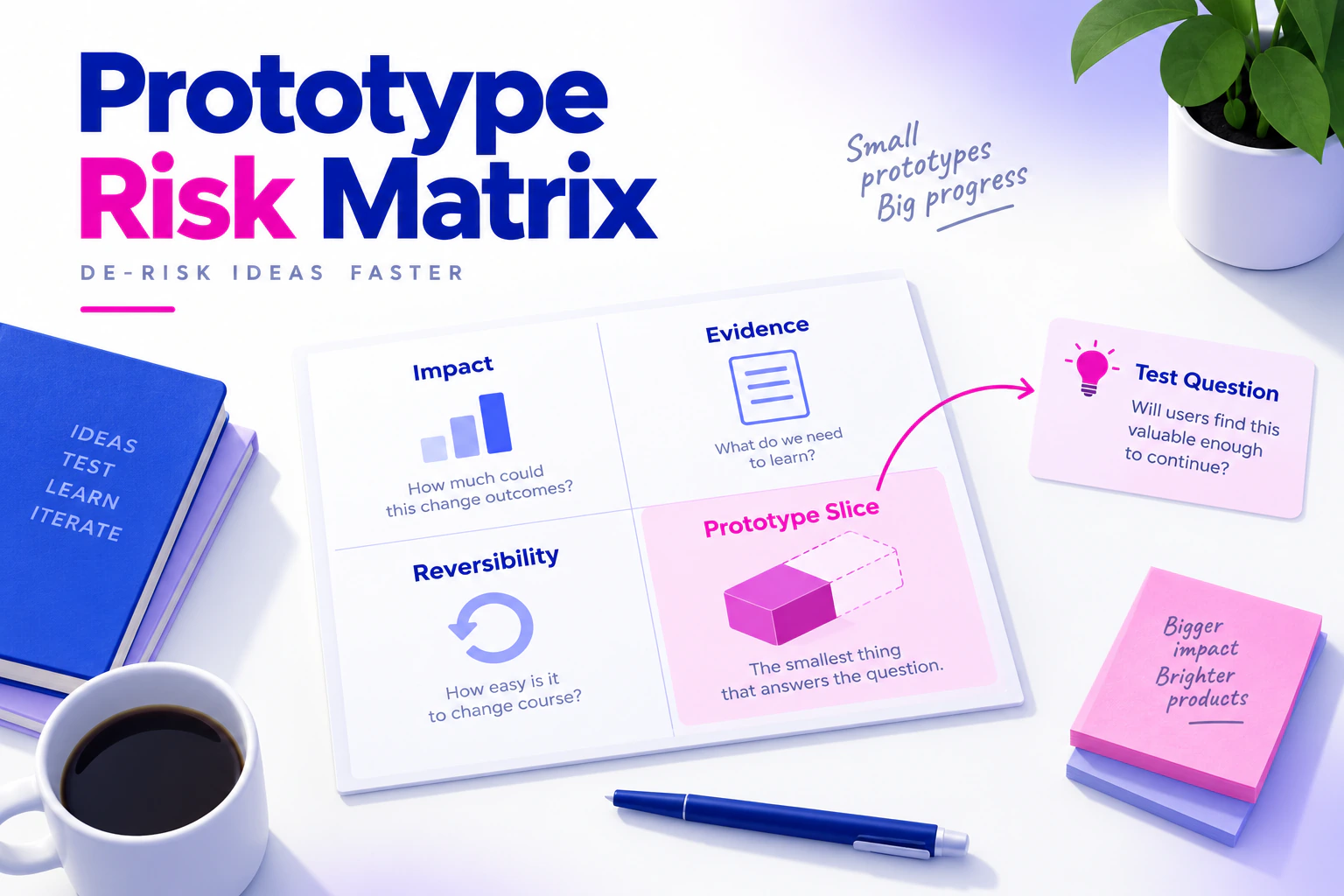
Prototype assumption mapping starts with what the team believes but has not proved. List each assumption, score its impact and evidence confidence, and design the smallest interaction that could change the decision. prototype risk matrix guide helps teams keep the decision and the prototype evidence together.
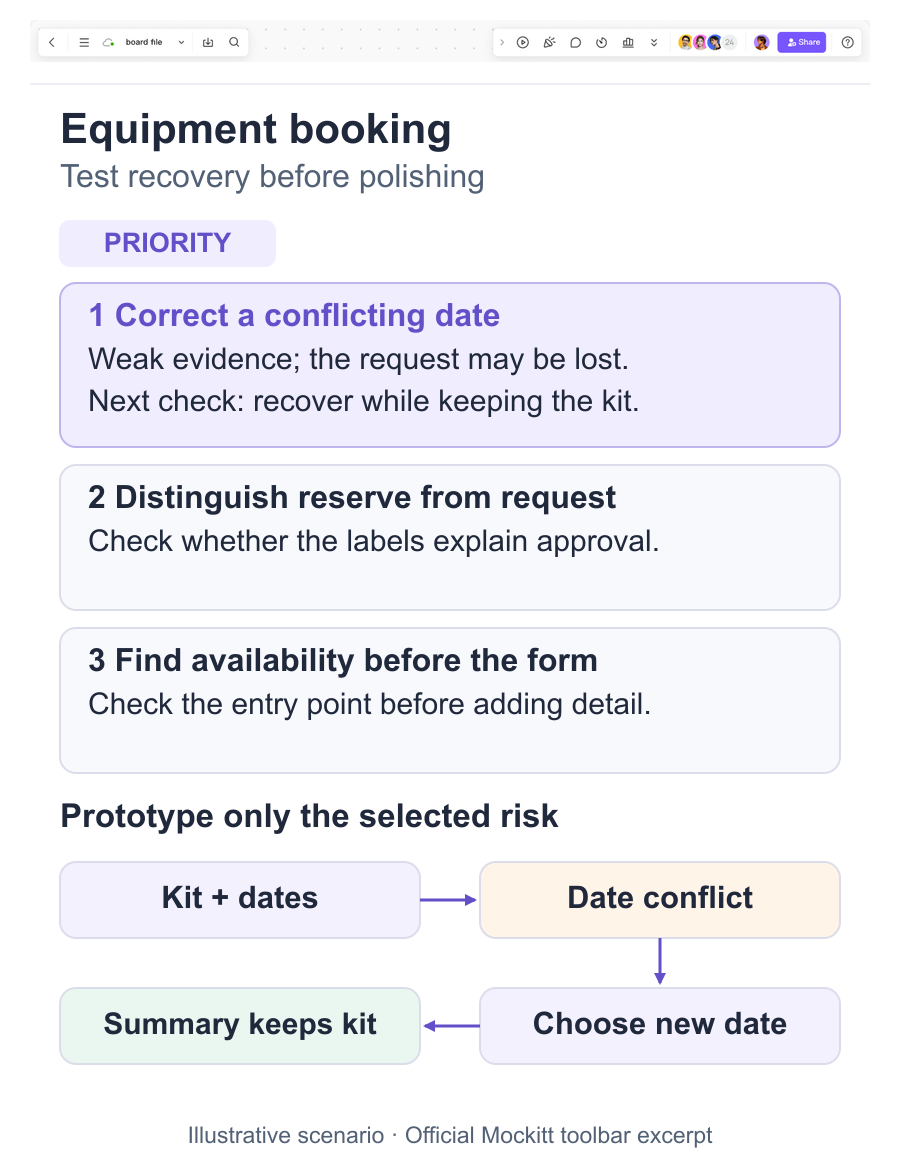
Start with assumptions, not screens
Write statements that could be false: “A borrower will accept a deposit if the return deadline is clear.” Avoid goals such as “make onboarding better.” Each statement should name a user, a behavior, and a condition that can be observed, providing a basis for a testable design hypothesis.
Build the impact × confidence map
Place every assumption on two axes. Impact asks how much the product decision changes if the statement is false. Confidence asks how strong the current evidence is. High-impact, low-confidence assumptions belong in the first prototype probe. Low-impact, high-confidence assumptions can wait.
- List the assumption and its source.
- Score impact and confidence with a short reason, not a false sense of precision.
- Choose the highest-risk assumption that can be observed in the next session.
- Define the behavior, state, or question that would count as evidence.
- Record the result and update the map after the session.
Design a minimum prototype probe
For the deposit assumption, prototype only the amount, explanation, deadline, and return confirmation. Test whether participants can explain what happens to the deposit and choose the correct next action. Do not build the full account system to answer a single comprehension question; use concept testing to explore the idea’s relevance before testing interaction detail.
Keep mapping separate from a decision log
An assumption map shows what is still unknown. A decision log records what the team chose. Link the two so a decision can point back to the evidence that changed the assumption, while unresolved risks remain visible for the next iteration.
When to stop mapping
Stop adding notes when every high-impact assumption has either a credible evidence source or a deliberately scoped experiment. If a test cannot change the decision, it is documentation rather than validation. Store the map and the prototype together so another team can reproduce the reasoning.