Part 1: Introduction
A UX job interview is also a chance to understand the team you might join. The ten questions below are for candidates to ask an employer; they are not questions for interviewing product users. Choose the ones that address your priorities, listen for examples, and leave time for a follow-up. Prepare a concise account of your own work too: a shareable Mockitt prototype can help you explain a design decision when the interview format allows it, but the tool does not replace your reasoning or evidence.
Part 2: Questions for your Interviewer
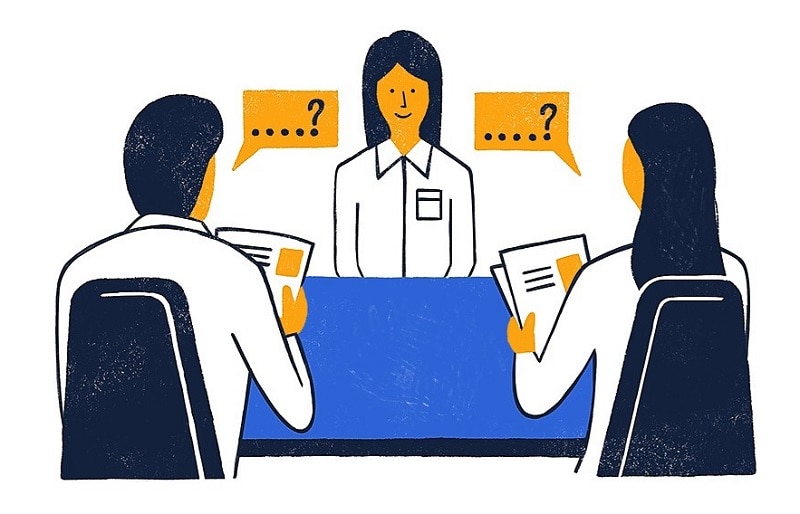
When an interviewer asks, “What questions do you have for us?”, use the time to investigate fit rather than recite a list. Ask about something not already answered, then request a concrete example. An answer can reveal a process or expectation, but a single response is not proof of the entire company culture. Note what you still need to clarify with the hiring manager or future teammates.
The following ten questions cover motivation, team structure, work, decisions, and development. You do not need to ask all ten in one session. Pick a small set that matters for this role, and adapt the wording to the conversation.
- What do you love about working here?
This opens a conversation about the employee’s experience. Listen for a specific project, colleague, or working practice rather than assuming a positive answer means the role is right for you. A useful follow-up is, “Can you describe a recent example?” You can also ask what they found surprising after joining. Their perspective is valuable, but it may differ from that of your future team.
- What Is the Team Structure, and Who Does the UX Team Report To?
Find out who you would work with, where UX sits, and who supports your development. Ask how designers collaborate with research, engineering, and product management. Reporting lines alone do not reveal the complexity of the work. Follow up with how responsibilities are shared on an actual project and who helps resolve conflicting priorities.
- How Is a Typical Day Divided Between Activities?
Use this question to understand the balance of research, design, meetings, and delivery. Ask whether the mix changes between discovery and implementation, and how much uninterrupted work time is typical. A role dominated by production work may suit different goals from one centered on exploratory research.
- How long do projects take to launch? Can you give me some examples?
Ask about a recent launch, including what “launch” meant: an experiment, a limited release, or a wider rollout. Follow up on how the team handles changing scope and dependencies. A duration without context is hard to interpret. The answer should help you understand the pace and uncertainty of the work rather than promise a universal delivery schedule.
- What Are the Design Team’s Strengths and Areas for Improvement?
Invite an honest account of what the team does well and what it is trying to improve. Ask which challenge the new hire is expected to help address and what support is available. Avoid immediately prescribing a fix for a problem you have only just heard about. A useful response identifies a concrete gap, its consequences, and the team’s approach to learning.
- Who Makes Design Decisions, and How Are They Made?
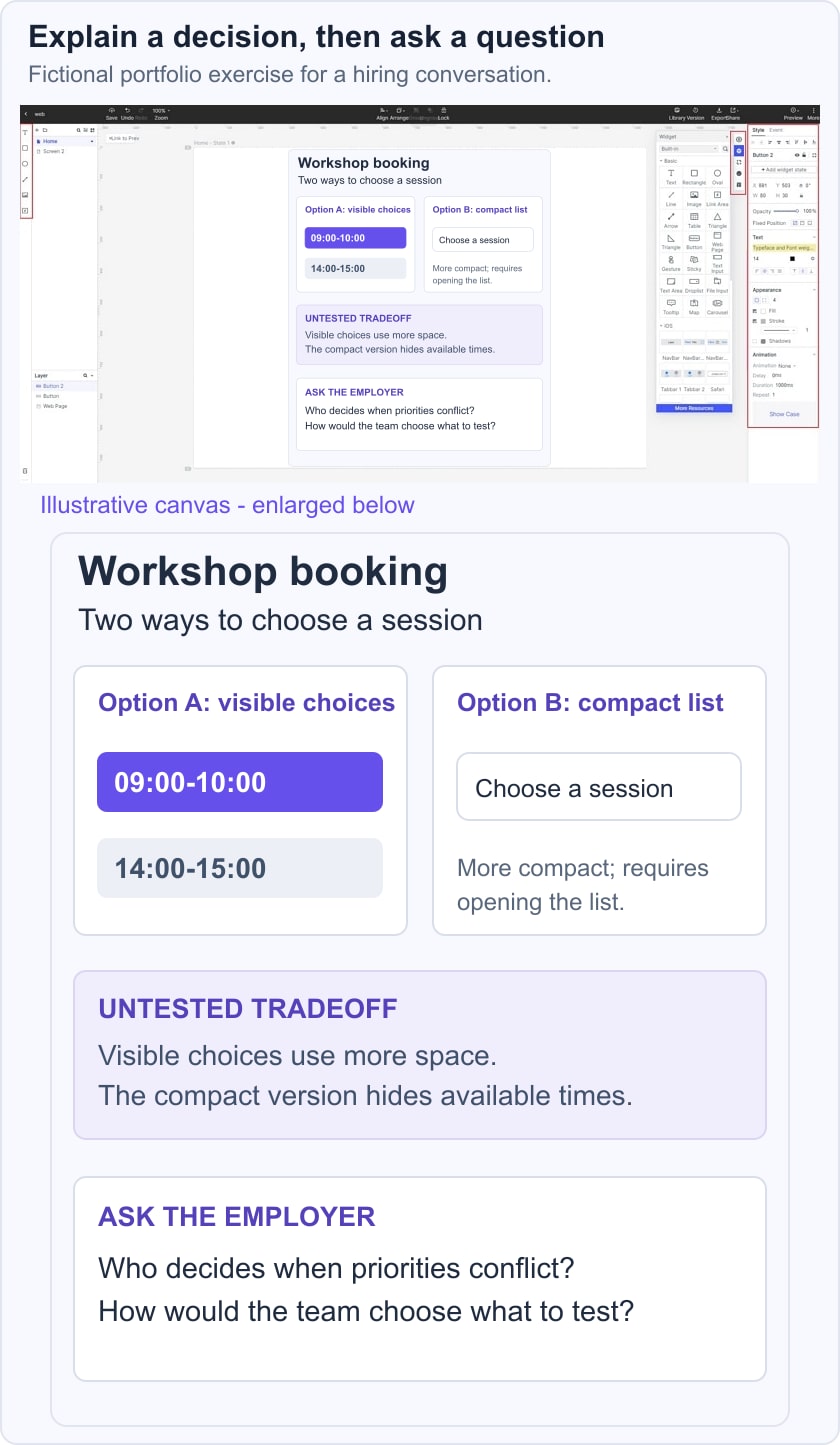
Ask how design decisions are made when evidence, technical constraints, and business priorities point in different directions. “Who decides when priorities conflict?” is more revealing than looking for a person with unrestricted authority. For an illustrative workshop-booking portfolio example, you could show two date-selection options, explain the tradeoff, and ask how the team would decide what to test. Label any untested idea as a hypothesis.
- What traits make someone successful in this company / on this team?
Ask for observable expectations: the decisions a person should handle, the quality of collaboration, or the outcomes they are expected to contribute to. Follow up with what success looks like during the first few months and how feedback is provided. This helps distinguish a clear role from a vague request to “be proactive,” without assuming that one answer predicts your performance.
- What is the typical career path for someone in this position?
Explore development opportunities without treating promotion as guaranteed. Ask about the differences between levels, how progression is assessed, and whether the team supports specialist and management paths. A concrete example of someone’s development can be helpful. If the role is new, ask which expectations are defined and which are still being worked out.
- How does your company maintain a work-life balance?
Ask about normal working hours, time-zone overlap, peak periods, and how the team responds when a deadline slips. General promises about balance are less informative than actual practices. Clarify the arrangements that matter to you, including flexibility or availability outside normal hours, through the appropriate hiring conversation.
- What Is Your Management Style, and How Would It Affect My Work?
Ask the hiring manager how they provide feedback, delegate decisions, and support someone who is blocked. If you are speaking to a recruiter, ask whether a later conversation with the manager is possible. You can follow up with how often one-to-ones happen and how disagreements are handled. Different management styles can suit different people; the aim is to understand the working relationship.
Compare the answers with your priorities and with what you learn in other interview stages. Look for examples and consistency, and keep unresolved questions for the appropriate person. You are evaluating a mutual working relationship, not trying to perform a particular personality type or predict the interviewer’s private judgment.
Part 3: Final tips for your UX design interview
Prepare a short explanation of your role, a decision, the evidence available, and what you would do next. Practice with a colleague or a UX mentor and ask where the explanation is unclear. Listen to the full question and request clarification when needed. Adapt your communication to the setting and any accessibility needs; eye contact is not a universal measure of professionalism. Protect confidential work and avoid presenting a team result as your individual contribution. NN/g’s guidance on answering UX job interview questions can support your preparation for the employer’s side of the conversation.
Part 4: Conclusion
Bring a few relevant questions, examples from your UX case studies, and a clear view of what you want to learn about the role. A rehearsal can help you explain decisions concisely, but it cannot guarantee an offer. After the interview, record what was answered and what remains uncertain so you can make an informed decision if the process continues.